Manual article / Aquaponics Production Manual
Integrated Pest Management
A sourced, attributed collection from its original edition.
On this page
Eliminating insect pests in aquaponic systems is more difficult than in traditional soil-based or hydroponic growing methods. Common insecticides are typically toxic to aquatic vertebrates at very low concentrations. Many practitioners implement an ecosystem-based approach to pest prevention and reduction, known as integrated pest management (IPM). This strategy may implement a pronged approach of physical, environmental, biological, and/or microbial controls.
- 8.1 Physical Controls
- 8.2 Biological/Chemical Controls
- 8.3 Chemical Applications
- 8.4 Common Pests
- 8.5 Disease Problems and Management
- 8.6 Common Fish Diseases and Their Treatment
- 8.7 Plant Disease and Prevention
- 8.8 Steps to Prevent Plant Disease in Aquaponic Systems:
- 8.9 Food Safety and Sanitation
Source: Janelle Hager, Leigh Ann Bright, Josh Dusci, James Tidwell. 2021. Kentucky State University. Aquaponics Production Manual: A Practical Handbook for Growers.
8.1 Physical Controls
Original publication · First published on FarmHub Learn · Kentucky State University
Preventing insects from entering the greenhouse is the best pest management strategy for aquaponics. Prevention is accomplished through consistent monitoring and physical controls. The use of adhesive, pheromone, or light traps can be used to monitor type of insect and level of infestation. Screens can be an effective physical control and can be used on outdoor systems or to cover vents in a greenhouse. Mesh size is an important consideration and should be as small as possible without restricting air flow and ventilation. Screen size for common pests are 0.15 mm for thrips, 0.73mm for white flies and aphids, and 0.8 mm for leaf miners. The most effective monitoring tool however, is the "farmer's shadow" (close monitoring by operators). Physical controls can also include a sanitation area for workers and production of plant seedlings in-house.
Source: Janelle Hager, Leigh Ann Bright, Josh Dusci, James Tidwell. 2021. Kentucky State University. Aquaponics Production Manual: A Practical Handbook for Growers.
8.2 Biological/Chemical Controls
Original publication · First published on FarmHub Learn · Kentucky State University
IPM strategies can also incorporate biological and/or microbial controls. These controls have many ecological advantages, including their host specificity, environmental beneficence, ability to be used in conjunction with chemical application, and that they are nontoxic and nonpathogenic to wildlife, humans, and other organisms not closely related to the target pest. Considering that these are precise, targeted control measures, cost can often be substantial.
Biological controls utilize insect predators of the target pest to control population numbers. While effective, use of beneficial insects may be cost prohibitive for smaller or hobby aquaponic systems. This strategy requires a tight predatory-prey ratio, as prey can be quickly depleted, leaving the beneficial insects with no food source. Predatory bugs such as spiders, ladybugs, praying mantis, bumblebees, and parasitic wasps are effective in combating pests.
Certain plants such as lavender, basil, rosemary, marigold, chrysanthemum, petunias, and carnivorous plants have natural oils and tactics that repel pests such as aphids, thrips, whiteflies, spider mites, and caterpillars. A natural pest repellant can be achieved by having large quantities of these plants inside and outside a plant production area.
Source: Janelle Hager, Leigh Ann Bright, Josh Dusci, James Tidwell. 2021. Kentucky State University. Aquaponics Production Manual: A Practical Handbook for Growers.
8.3 Chemical Applications
Original publication · First published on FarmHub Learn · Kentucky State University
Pesticides derived from biological or microbial sources are also effective and widely available. Biopesticides are derived from natural materials such as animals, plants, bacterial, and certain minerals. Common biopesticides include biofungicides (Trichoderma), bioherbicides (Phytopthora), and bioinsecticides (Bacillus thuringiensis, B. sphaericus). B. thuringiensis (Bt) has become an increasingly common mechanism to target specific vegetable pests. Bt consists of a spore that contains a toxic protein crystal.
Certain insects that consume the bacteria release toxic crystals into their gut, blocking the system, which protects the pest's stomach from its own digestive juices. The stomach is penetrated, causing insect death by poisoning from stomach content and spores themselves. This same mechanism is what makes Bt harmless to birds, fish and mammals, whose acidic gut conditions negate the bacteria's effect.
Microbial pesticides come from naturally occurring or genetically altered bacteria, fungi, algae, viruses or protozoans. These compounds can take different modes of action, including release of toxic compounds, disruption of cellular function, and physical effect. Beauvaria bassiana, for example, is a fungus that gets under the chitin (shell) of hard-bodied insects, resulting in dehydration and death.
Chemical pest controls used for aquaponic farms include neem oil and extracts, soaps, pyrethrum-based products, and anything that is OMRI approved. These chemicals should be used in moderation and label instructions should be followed to avoid any plant or fish damage. Before any chemical is applied to the aquaponic system, the impact on the fish and biofilter must be considered. Limiting contact between the chemical and water is critical and may be more difficult in deep-water culture and media-based systems. The following is an example on how to calculate if a pesticide is safe to apply to the aquaponic system (Storey 2016).
Note: Refer to the Safety Data Sheet (SDS) and find the LC50 value or the lethal concentration of a pesticide at which 50% of the tested population dies. Rainbow trout or tilapia are often reported. The lowest concentration over the shortest time should be used.
Example 1: Pyrethrum -- the active ingredient in Pyganic 1.4
Step 1: Determine the LC50 value from the chemical's SDS sheet -- 0.0014 mg/L
Step 2: Determine the LC50 value for your system. Take the volume of your system in liters and multiply it by the LC50 (96 hr) value. Let's use a 2,000-gallon (7,580 L) system as an example.
$7,580\ \text{L/sys. X }0.0014\text{ mg/L }= 10.61\text{ mg/system}$
Step 3: Take the pyrethrin concentration and determine how much pyrethrin is being mixed.
The label recommends mixing 1--2 fluid ounces of Pyganic 1.4 with every gallon of water in compressed sprayers, which is between 2--4 Tbsp/gallon. In a 2,000 gallon system, the entire crop can be sprayed with 0.75 gallons of mix, which at the highest application rate is around 3 Tbsp (or 1.5 fluid ounces).
The label tells us that 0.05 lbs of active ingredient (pyrethrin) is the equivalent of 59 fluid ounces.
0.05 lbs pyrethrin/59 fluid ounces = 0.0008475 lbs pyrethrin/fluid ounce
0.0008475 lbs pyrethrin/fluid ounce X 453,592 mg/lb = 384 mg pyrethrin/fluid ounce
Step 4: Determine how much pyrethrin is being applied to the system.
1.5 fluid ounces/system X 384 mg pyrethrin/fluid ounce = **576 mg pyrethrin/system **
Step 5: Compare application concentration to LC50 of your system. 576 mg pyrethrin/system is much larger than the LC50 value for a 2,000-gallon system (10.61 mg/ system from step 2). This means that this product is NOT a good choice for application.
Example 2: Azadirachtin -- active ingredient in AzaMax Biological Insecticide, Miticide, and Nematicide
Step 1: Determine the LC50 value from the chemical's SDS sheet -- 4 mg/L (96 hours) for rainbow trout.
Step 2: Determine the LC50 value for your system. Take the volume of your system in liters and multiply it by the LC50 (96 hr) value. Let's use a 2,000-gallon (7,580 L) system as an example.
$7,580\text{ L/sys. X }4\text{ mg/L mg/L} = 30,320\text{ mg/system}$
Step 3: Take the pyrethrin concentration and determine how much pyrethrin is being mixed. The label recommends mixing 1--2 fluid ounces of AzaMax with every gallon of water in compressed sprayers, which is between 2--4 Tbsp/gallon. In a 2,000 gallon system, the entire crop can be sprayed with 0.75 gallons of mix, which at the highest application rate is around 3 Tbsp (or 1.5 fluid ounces).
The label tells us that the product contains 0.35 g of azadirachtin per fluid oz. Convert g to lb:
0.35 g azadirachtin/ounce ÷ 454 g/lb = 0.0007716 lbs pyrethrin/fluid ounce 0.0007716 lbs pyrethrin/fluid ounce X 453,592 mg/lb = 350 mg pyrethrin/fluid ounce
Step 4: Determine how much pyrethrin is being applied to the system.
1.5 fluid ounces/system X 350 mg pyrethrin/fluid ounce = 525 mg pyrethrin/system
Step 5: Compare application concentration to LC50 of your system.
525 mg pyrethrin/system is much smaller than the LC50 value for a 2,000-gallon system 30,320 mg/ system from step 2). This means that this product is SAFE to use in your aquaponic system. Even if a product is generally safe, limiting exposure to the water and organisms is still critical.
Source: Janelle Hager, Leigh Ann Bright, Josh Dusci, James Tidwell. 2021. Kentucky State University. Aquaponics Production Manual: A Practical Handbook for Growers.
8.4 Common Pests
Original publication · First published on FarmHub Learn · Kentucky State University
Mites: Mites are a very common pest, affecting hundreds of plants. These small arthropods are very small, often measuring less than 1 mm in length, and have sucking mouthparts. Damage to plants by mites includes brown stippling on leaves, upturned leaf margins, stunted plant growth, and webbing between plant structures (spider mites). Symptoms can mimic those of viral infections, particularly those caused by the broad mite, so identification should be done under a microscope. Mites typically have a 10-to-14 day life cycle and thrive in dark, humid conditions. Treatment options include neem oil and predatory insects such as ladybird beetles, lacewings, pirate bugs, predatory thrips, mites, and big-eyed bugs. Common types include Spider mite, Broad mite, Russet mite, and Cyclamen mites.
Aphids: A primary nemesis of most vegetable gardeners and plants, aphids can be very destructive to plants. Aphids are typically pear-shaped with two tail-like protrusions at the bottom of their abdomen (Figure 19a). The life cycle is very short, ranging from 10 days to three weeks. Their reproduction capacity makes them a particularly hard insect to control. Aphids can reproduce sexually or asexually and can switch between the two depending on the environment (Van Emden and Harrington 2017). Most aphids are born pregnant. Females will either create daughter clones that produce both male and female offspring, leading to sexual reproduction and eventually egg deposition, or female aphids will simply create live birth clones of themselves without the help from males. Female clones can survive the winter and continue the cycle by creating more clones.
Aphids are commonly found in colony clusters on new growth, base of buds, and on the underside of leaves. Feeding occurs through rasping mouth parts that drain essential nutrient and glucose from the phloem. As a result, leaves of plants infested with aphids often look shriveled, discolored, or stunted. Aphids excrete a substance called honeydew, a sugar-rich, sticky liquid that attracts ants. The ants protect aphids from predators.
Luckily, ladybird beetles (ladybugs) are natural aphid predators. Other treatment options include avoiding high nitrogen levels, physically removing aphids with a strong spray of water, applying a soap-water solution to plants, and applying of neem oil (Flint 2013).
Caterpillars: Caterpillars, the larval stage of butterflies and moths, can demolish leafy crops within a short window (Figure 19b). Their voracious eating habits make them one of the most significant agriculture pests. Adults feed on pollen nectar and are not a danger to plants; however, if you see adults, you likely have caterpillars as well. A caterpillar causes leaf damage that appears as holes or large missing section.
Frass, or fecal deposits, appear as small brown/black pellets and are present near damaged tissue.
Common pests include cabbage looper and cabbage worms (Figure 19c) on Brassica sp., cutworms (Figure 19d), diamondback moths (Figure 19e), hornworms (Figure 19f), beet armyworm (Figure 19g), and inchworms (Figure 19h).
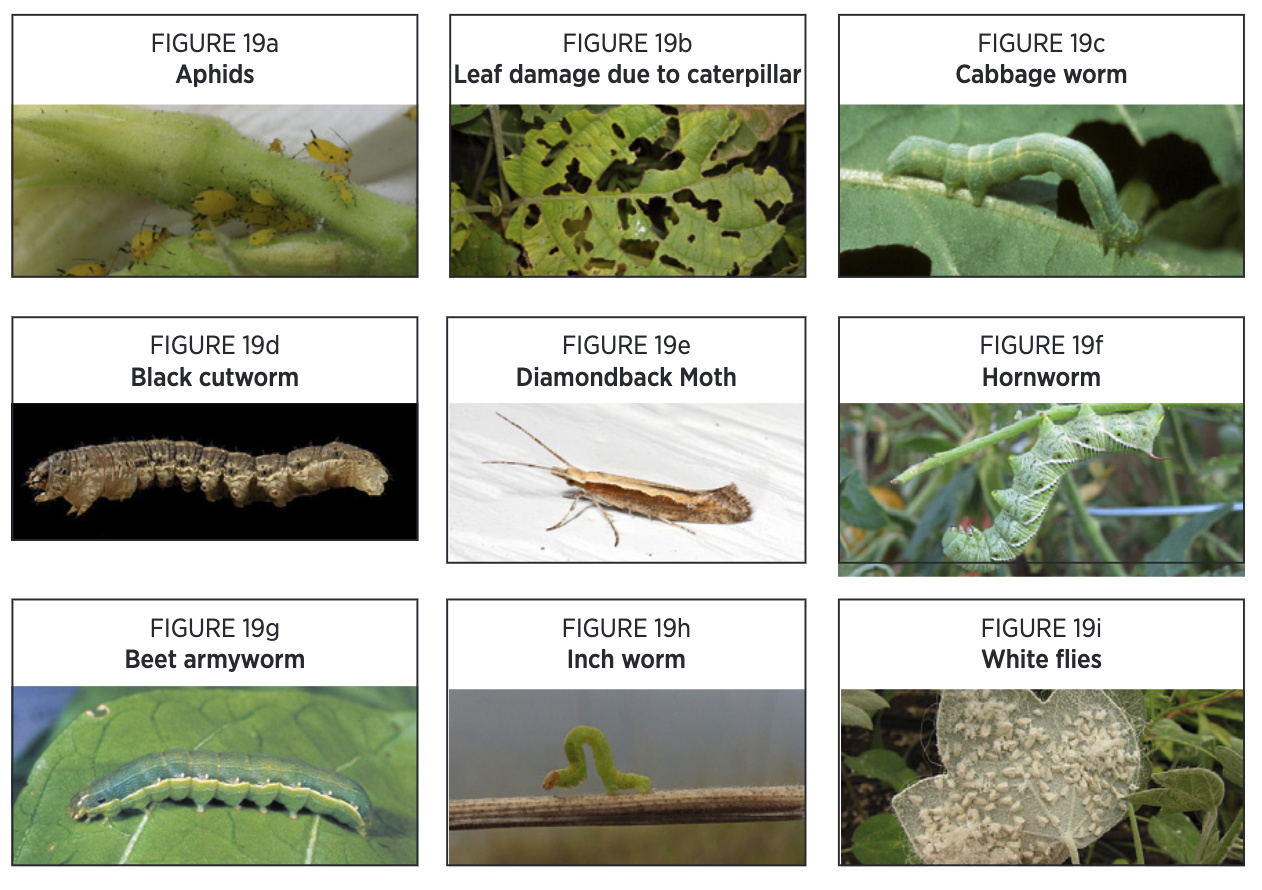
Common treatments include hand removal, B. thuringiensis (Bt), assassin bugs, and lacewings. Chemical application is not recommended, as it is often more damaging to beneficial insects than target pests and leads to chemical resistance.
White flies: White flies are sap-sucking insects that are significant pests in a wide variety of vegetable crops (Figure 19i).
There are three primary whitefly species that impact vegetable crops in the U.S.: the sweet potato, greenhouse, and the banded-winged whitefly (Natwick et al. 2016). Adults of these species are small (1.52 mm) with yellow bodies and wings covered in a white, waxy powder. Most life stages are found on the undersides of leaves, where the adults and nymphs feed. Commonly affected crops include beans, broccoli, cabbage, cauliflower, cucumber, eggplant, melon, peppers, squash, tomato, and watermelon.
Plants with heavy infestation levels may appear stunted, have yellowing or silvering of the leaves, and have defoliation resulting in reduced yields. Honeydew, excreted during feeding by whiteflies, can reduce the quality and marketability of vegetable crops. Perhaps the most damage caused by whiteflies is their role as a vector for more than 100 different plant viruses.
Natural enemies can be effective in reducing or controlling pest levels in greenhouses. Common biological controls are predators (lacewings, bigeyed bugs, lady beetles), parasites (specifically Encarsia formosa, a parasitic wasp), and fungal entomopathogens. Insecticidal soaps and oils can provide some control of whiteflies, but active compounds must cover the undersides of leaves where the insects hide.
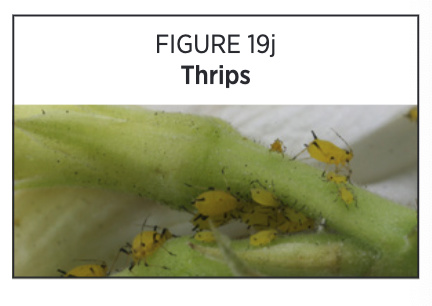
Thrips: Thrips are tiny narrow insects that are a common and persistent pest of vegetable crops in both greenhouse and outdoor systems (Figure 19j). Of the hundreds of species affecting vegetable crops, the Western Flower thrip and the Onion thrip are the most pervasive. Thrips, like other insects mentioned here, are sucking insects that drain water and nutrients from the leaves, leaving them discolored with silvery feeding scars and wilting of plant components.
All life stages may be damaging, as eggs are commonly laid inside plant tissue, leaving a scar. Typically, the larval and adult life stages are going to be the most damaging due to plant feeding behavior and the risk of transmitting viruses to the plant. Thrips complete their lifecycle in 3-5 weeks.
Thrips can be hard to see directly on the plant, depending on the species. Shaking the leaf over a white piece of paper can help make them more visible. Treatment options vary according to species. Biological controls include lacewing larvae, pirate bugs, and predatory thrips.
Management of the culture environment and prevention is key to preventing thrips. Use of sticky traps placed at the base of plants or examination of the underside of leaves for feeding scars are ways to monitor for presence of thrips. Thrips can be prevented by using proper sanitation protocols for culture equipment, only using seedlings grown in-house, and preventing weedy areas or overgrown vegetation near the plants or greenhouse.
Chemical applications can be effective at treating thrips however most treatments do not kill them outright and instead prevent them from feeding and thus starving the insect. Due to their lifecycle stages that exist within the plant, multiple applications may be necessary to eliminate them from the system or control an outbreak.
A more comprehensive overview of vegetable pests can be found at: https://entomology.ca.uky.edu/ent60 http://www.uvm.edu/~entlab/Greenhouse%20IPM/pestsandbiocontrols.html https://content.ces.ncsu.edu/insect-and-related-pests-of-vegetables
Source: Janelle Hager, Leigh Ann Bright, Josh Dusci, James Tidwell. 2021. Kentucky State University. Aquaponics Production Manual: A Practical Handbook for Growers.
8.5 Disease Problems and Management
Original publication · First published on FarmHub Learn · Kentucky State University
Fish Disease and Treatment
Fish culture is inherently a messy business. Bacterial pathogens and parasites that affect fish are naturally occurring and opportunistic by nature. Good management, proper husbandry practices, and daily observation of fish can prevent many issues associated with fish health. Proper management techniques in the fish production of the aquaponics system should include: system design, water quality monitoring and correction, equipment maintenance, feed storage, fish observation to remove sick or dead fish, and worker sanitation. Common external physical signs of fish disease include:
-
Hemorrhage: an abnormal discharge of blood
-
Lesions: a defined area of diseased tissue such as an ulcer, blister, or canker
-
White spots or pustules
-
Pale or swollen gills: often seen with fish "gulping" at the surface of the water for air
-
Dark coloration
-
Excess mucus on the skin or gills
-
Sloughing of skin
-
Emaciation
-
Distended abdomen
-
Exophthalmia: pop-eye
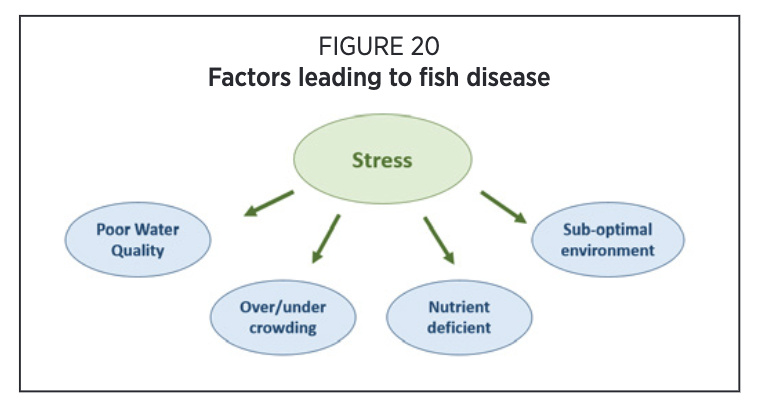
There are four major groups of pathogens related to fish culture: fungi, bacteria, viruses, and parasites. Common fish diseases and their treatment are listed below. Typically, diseases seen in aquaponic production systems are a result of environmental or physical stress (Figure 20). Stress can stem from 1) rough or excessive handling, 2) confinement of non-domesticated species of fish into tank systems or inappropriate stocking densities, 3) improper feed supply, feeding regiment, or nutrition and 4) poor or unsuitable water quality conditions.
In preparation for stocking fish, biofilters must be broken in (populated with established bacteria before fish are stocked in the system) and water quality parameters must be within acceptable ranges for the species of fish being cultured. Once fish are on-site, and before they are stocked into new or existing production, they should be quarantined and treated prophylactically for external parasites using salt, formalin, potassium permanganate, or other approved treatments. Treatment must happen outside of the production system, as chemicals introduced in the aquaponic system will cause the biofilter to crash and the whole process will have to be started over. Fish should also be observed for any physical abnormalities in appearance or behavior. Many diseases are first detected by observing abnormal swimming patterns.
Signs of abnormal behavior include whirling, flashing, bobbing, gasping, or side-swimming. Quarantine facilities and general good fish-handling protocols should include 1) washing hands before and after interaction with tanks, equipment, feed, or fish, 2) using nets and other equipment only in the quarantine or production area, 3) thoroughly drying or even bleaching between uses (via bleach buckets or spray bottles) to kill bacteria, fungus, and parasites, and 4) working in quarantine areas as the last task of the day to prevent cross-contamination. Arthur et al. (2008) provide a comprehensive overview of quarantine procedures for live aquatic animals.
Once fish have been stocked and the system is in operation, it is critical that water chemistry be conducted regularly and that resultant numbers are checked as acceptable for both fish and plants. Any necessary adjustments should be made as soon as issues are identified, as water chemistry problems will not self- correct. Early detection and intervention is the best measure to make sure that production is maximized for both time-to-market and crop yield.
During production, fish that are crowded into tanks for intensive culture can get stressed, which is manifested several ways. Stressed fish can go off feed (stop eating); hit the sides of tanks, causing abrasions to their body or fins; nip at each other in aggression; and even jump out of tanks, resulting in death.
Stressful culture conditions weaken the fish's immune systems, leaving them more susceptible to bacterial and fungal infections. Typically, at the first sign of illness, fish will stop eating. At this point, medicated feed is useless, and a chemical treatment is required.
Another way fish become diseased through stress is poor water quality conditions. This can be a result of poor water chemistry and inadequate water conditions. For example, fish become stressed during acute or chronically low levels of dissolved oxygen and are more susceptible to disease. Another example is occasional overfeeding of fish. The excess protein breaks down into total ammonia-nitrogen, which breaks down further into toxic components of un-ionized ammonia-nitrogen and nitrite-nitrogen. The biofilter component is not sufficient to convert these compounds to nitrate, leading to stress on the fish from poor water quality. These toxic components are further exacerbated by issues such as high pH and increasing temperatures.
To prevent stress on the fish, a general rule of thumb is to stop or reduce feed input in the system:
-
When temperature is outside of species range
-
When fish are sick or stressed
-
24-48 hours before/after transport
-
24 hours before sampling
-
3-4 days before processing
-
When low DO is present
-
When water quality parameters are sub-par
If fish stocked into production become sick, they should be removed from the system immediately for treatment or disposal. Water amendments should be made promptly, stocking rates should be checked, water flow should be checked, and water exchanges may be necessary. There are no good treatment options for treating systemically in production, as chemicals cannot be used with coupled aquaponic systems. Fish can be removed or isolated, treated in containment, and reintroduced at a later date.
System design plays a role in disease prevention. Tanks used for fish culture should be round and preferably have a conical bottom for removal of settle-able solids. Design should be such that tanks are easy to disinfect, can be isolated individually from the rest of the system, and have windows to view fish in the water column.
Source: Janelle Hager, Leigh Ann Bright, Josh Dusci, James Tidwell. 2021. Kentucky State University. Aquaponics Production Manual: A Practical Handbook for Growers.
8.6 Common Fish Diseases and Their Treatment
Original publication · First published on FarmHub Learn · Kentucky State University
Parasites
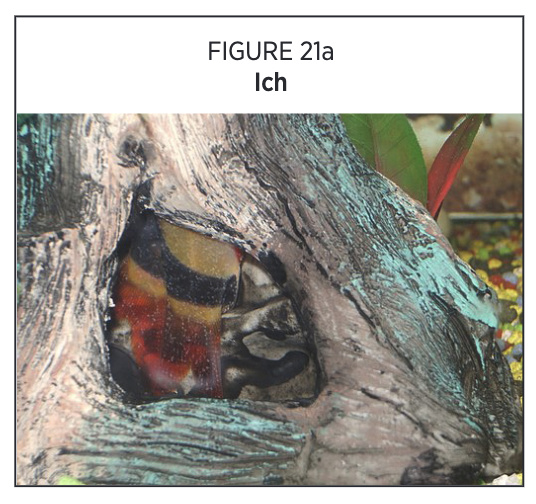
Ich (white spot disease): Ich is caused by the parasite Ichthyophthirius multifiliis (Ich). Ich appears on infected fish as small white specks on their skin and/or gills (Figure 21a). Fish may exhibit "flashing" behavior, characterized by a quick rubbing or scratching movements against the tank bottom, wall, or surface of the water (Durborow et al. 2000). Excess mucus is commonly present; however, the only clear sign may be a dead or dying fish. Treatment for Ich is difficult; however, elevating water temperature to above 85°F can kill Ich by disrupting its life cycle. Chemical treatments for quarantine tanks or decoupled systems include multiple treatments of formalin, copper sulfate (CuSO4), or potassium permanganate (KMnO4). Check appropriate dose rates before administering. These chemicals should not come into contact with plant components and must be administered in an isolated tank. Simply harvesting the fish may be the simplest solution.
 Whirling disease: Caused by Myxobolus cerebralis, whirling disease primarily infects salmonids (trout and salmon) and can enter the aquaculture system through affected fish. Symptoms include abnormal swimming, darkening of posterior part, and skeletal deformation (Idowu et al. 2017). There is no true effective treatment for whirling disease. Producers should only purchase salmonid fingerling from hatchery that are certified whirling disease free and use treated water or ground water for production.
Bacterial Infections
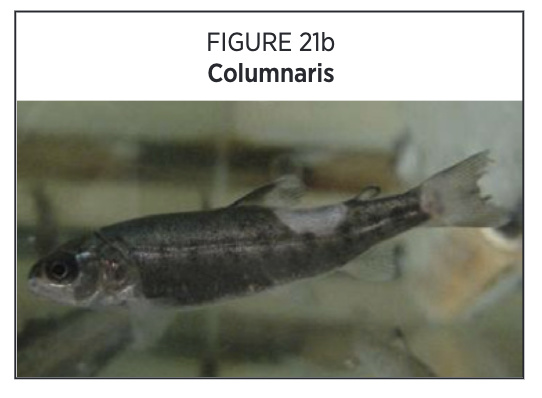
Columnaris: Infections from Flavobacterium columnare are common in aquaculture-reared fish. Common symptoms include red or pale ulcers on the skin; yellowish mucus on the skin, gills, and/or mouth; and necrosis/erosion of the gills. Saddleback is a common lesion caused by columnaris and appears as a pale white saddle-like band encircling the body (Figure 21b). The bacteria can cause disease under normal culture conditions, but more likely when fish are stressed by low oxygen, high ammonia, high nitrite, high water temperatures, rough handling, mechanical injury, and crowding. (Durborow et al. 1998). Columnaris is typically treated with chemical treatment of the water using KMnO4 or by using Terramycin® (oxytetracyline HCl). Medicated feed that contains the antibiotics Aquaflor®, Terramycin® or Romet® may be effective. Chemical treatments or antibiotic feed should not come into contact with plant components and must be administered in an isolated tank.
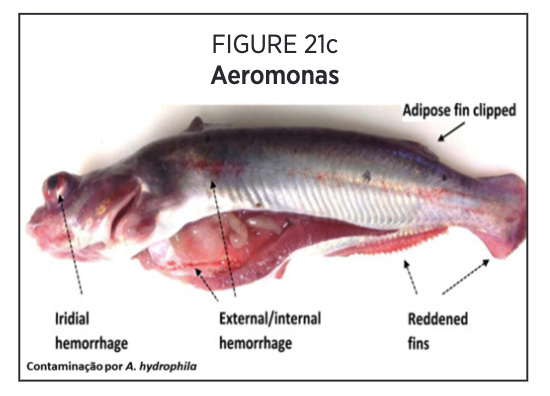
Aeromonas: Aeromonas is a genus of bacteria that is widespread and is commonly isolated from freshwater culture environments. The disease caused by these bacteria in fish is called Motile Aeromonas Septicemia (MAS) (Hanson et al. 2019). Aeromonas infections are probably the most common bacterial disease diagnosed in cultured warmwater fish. Fish with septicemia often have hemorrhages (red areas or spots) on the skin, eyes, and fins; a dis¬tended abdomen; flared scales due to edema in the scale pockets (dropsy); and/or a red, inflamed anus (Figure 21c). Internally, the muscle and visceral tissue are often red, and the body cavity may contain bloody fluid. Typical MAS can be attributed to a predisposing factor, such as a handling event, temperature shock, water quality stressor, spawning, or aggression. Treatment is currently limited to three antibiotics: Aquaflor®, Terramycin® and Romet®-30. Proper withdrawal times for each antibiotic must be observed before treated fish can be processed/harvested. Chemical treatments or antibiotic feed should not come into contact with plant components and must be administered in an isolated tank.
Enteric Septicemia of Catfish (ESC): ESC is also known as "Hole-in-Head Disease" and is caused by the bacteria Edwardsiella ictaluri. It most commonly affects catfish species and is accountable for one-third of reported fish diseases in the southeastern U.S. Behavioral signs of infection include head-chasing-tail or whirling rather than swimming, as well as "star gazing." External signs include red or white shallow ulcers, a hole appearing in the top of the head, and fluid buildup in the abdomen, causing severe distension. Treatment is typically administering medicated feed containing the antibiotics Aquaflor®, Romet®, or Terramycin®. Chemical treatments or antibiotic feed should not come into contact with plant components and must be administered in an isolated tank.
Viral Infections
Tilapia Lake Virus (TiLV): TiLV is one of the only significant viruses that affect tilapia in both wild and cultured situations. It is caused by Tilapia tilapinevirus and has been seen in Asia, Africa, and South America. It is transferred quickly through infected populations, and there is no treatment at the time of this publication.
Source: Janelle Hager, Leigh Ann Bright, Josh Dusci, James Tidwell. 2021. Kentucky State University. Aquaponics Production Manual: A Practical Handbook for Growers.
8.7 Plant Disease and Prevention
Original publication · First published on FarmHub Learn · Kentucky State University
Plant disease problems can be difficult and time consuming to treat. Preventing issues from arising is the first step in proper plant care. Many foliar plant diseases are present during conditions of high temperature and humidity. Providing proper ventilation and reducing humidity will prevent conditions that allow mold and disease to spread to other plants.
Plant nutrition plays a direct role in disease resistance in plants (Agrios 2005). Providing the correct balance of nutrients is important not only for growth but also to decrease susceptibility and increase recovery from certain plant disease. Table 10 describes the role of certain nutrients for prevention of plant disease. Below are common plant diseases in aquaponic systems.
Table 10: Role of nutrition in plant disease resistance.
| Nutrient | Effect |
| Nitrogen | Overfertilization makes more succulent tissues that are more prone to fungal attack. Nitrogen starvation results in stunted plant that are more prone to attack from opportunistic micro-organisms. |
| Phosphorus | Improves nutrient balances and accelerates maturity of the plants. |
| Potassium | Accelerates wound healing and reduce the effect of frost damage. Delays maturity and senescence of plants. |
| Calcium | Reduces the severity of some root and stem fungal diseases. Affect the cell wall composition in plants that resist fungal penetrations. |
| Silicon | Helps plants produce specific defense reactions, including the releases of phenolic compounds against pathogens. |
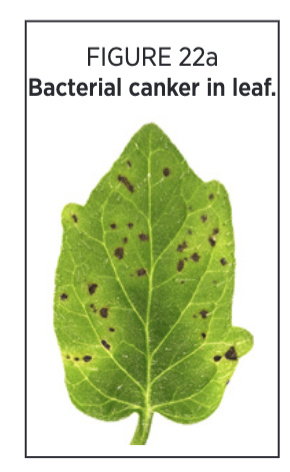
Bacterial canker: The bacteria that causes bacterial canker, Pseudomonas syringae, enters the plant through existing wounds caused by pruning, harvesting, or injury. Signs of bacterial canker include marginal browning or necrosis on leaves, elongated tan regions or splitting of the stem, and/or small white spots on the fruit (Figure 22a). The most common cause is unsanitary growing condition or harvesting tools.
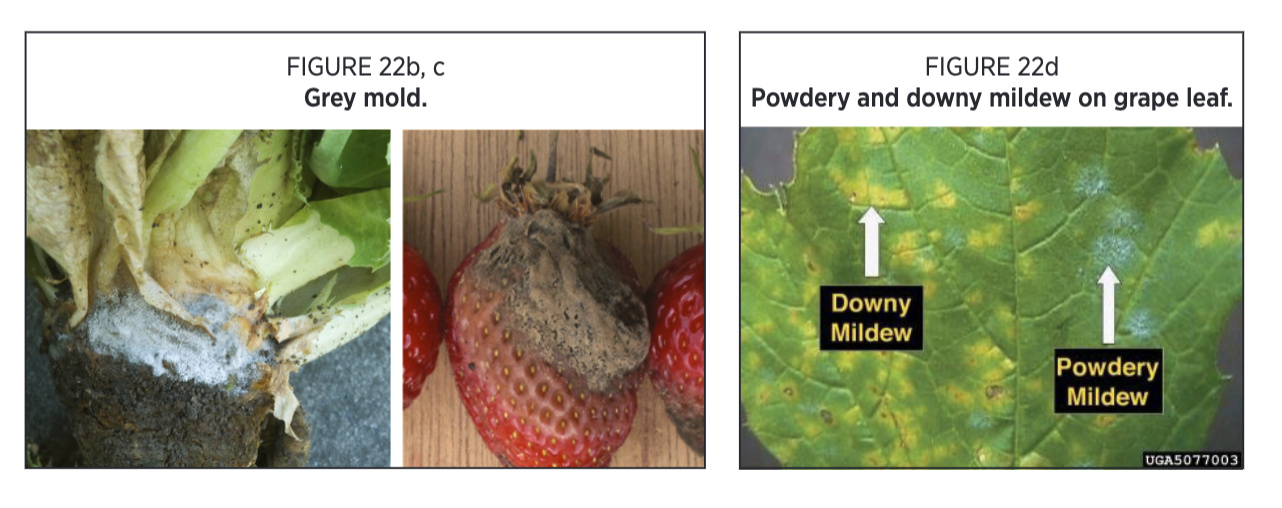
Grey mold: Caused by the pathogenic fungus, Botrytis cinerea, grey mold can be found almost anywhere plants are grown. Prevalent during damp, cool weather, grey mold can spread quickly through the crop, affecting stems, leaves, and fruits. Leaves may have brown lesions that spread over the entire surface, causing the leaf to wilt (Figure 22b). If not controlled, spores will spread to flowers and fruits, where fuzzy, grey growth will appear (Figure 22c). Improving ventilation with fans and air flow within the plant structure through pruning are preventative measures. In addition, removing fallen or diseased plants and avoiding injury to trellised plants is critical in preventing grey mold.
Powdery and downy mildew: These two types of mildew affect nearly all vegetable crops. Primarily affecting the leaves of the plant, they are more prevalent in humid conditions. Powdery mildew is circular and white in appearance and can appear anywhere on the leaf surface. The leaf may yellow if the fungus has been present for a long time. A downy mildew spot is angular and grey in appearance and the fungus is limited by the leaf vein. Leaves may appear yellow before the presence of the fungus is evident (Figure 22d).
Pythium: The causative agent for root rot in plants, Pythium sp. are found naturally in the culture environment and impact a wide variety of plants. Symptoms include brown, rotting roots that slough off easily when disturbed (Figure 22e). Plants may appear stunted or nutrient-deficient. Different species of Pythium are prevalent at specific temperatures; however, in aquaponics they commonly appear at water temperatures above 78°F and conditions with high organic solids. Controlling temperature and implementing effective solids removal will limit Pythium sp. in an aquaponics system.
Source: Janelle Hager, Leigh Ann Bright, Josh Dusci, James Tidwell. 2021. Kentucky State University. Aquaponics Production Manual: A Practical Handbook for Growers.
8.8 Steps to Prevent Plant Disease in Aquaponic Systems:
Original publication · First published on FarmHub Learn · Kentucky State University
-
Control temperature and humidity of the growing environment. High temperature and humidity often are the ideal environment for growth and spread of fungal and bacterial disease in plants. Particularly in a greenhouse or indoor facility, forced air ventilation and prevention of evaporation will reduce these parameters. It is also important to control these in and around the plant structure. This is accomplished through appropriate plant spacing and pruning fruiting crops with dense foliage.
-
Sanitation. Implementing sanitation standard operating procedures (SSOPs) will help prevent disease outbreak in vegetable production units. Sanitizing propagation and harvesting tools and growing equipment such as rafts and NFT channels will also help prevent disease outbreak.
-
Remove dead or diseased plants. Prompt removal and disposal of affected plants can help the spread of disease in the facility.
-
Choose appropriate plant species. If external environmental conditions cannot be controlled, choosing resistant or appropriate varieties will save practitioners time and money.
-
Seed quality and storage. Buy quality seeds and store them under refrigeration to prevent the seeds from molding and to increase germination.
Source: Janelle Hager, Leigh Ann Bright, Josh Dusci, James Tidwell. 2021. Kentucky State University. Aquaponics Production Manual: A Practical Handbook for Growers.
8.9 Food Safety and Sanitation
Original publication · First published on FarmHub Learn · Kentucky State University
Sanitation and cleanliness of an operation is critical to ensure Good Agricultural Practices (GAP) regarding food safety (Hollyer et al. 2012). This is important because as of 2018, the CDC estimated that each year, 48 million people get sick from a foodborne illness, 128,000 are hospitalized, and about 3,000 people die. If the aquaponics industry wants to become a larger part of global food production and the fresh-cut sector, it is critical to maintain a good reputation and positive public perception of food safety for both fish and plants cultured within the same system.
The largest food safety concern within aquaponics is the spread of zoonotic pathogens (E. coli, salmonella, etc.), which can be present in harmful quantities within the water. The contamination can happen from people contacting the water or from consuming plant leaves that have been in contact with the aquaponic water (Hollyer et al. 2012). Analyzing water and plant samples annually will help producers build a strong understanding of potential sources of contamination.
Prevention is the best tactic for biosecurity and food safety, which is why every aquaponics operation should have SSOPs (Sanitation Standard Operating Procedures) and follow the seven principles of HACCP (Hazard Analysis and Critical Control Point). SSOPs are written rules for food processing that an operation develops and implements to prevent any contamination of their tools or production space. HACCP dictates the maximum/minimum values to which biological, chemical, or physical parameters must be maintained at a critical control point to prevent food safety hazards. Examples of sanitation procedures to eliminate the spread of disease, pests, and food safety issues for both fish and plants include:
-
Annual pathogen and bacterial tests
-
Continuous improvements to SSOPs and HACCPs
-
Overall production space cleanliness and biosecurity
-
Tool sanitation
-
Human sanitation
-
Sanitation education
-
Proper food storage
Sanitation is especially important when considering that most aquaponics systems are recirculating, and what is normally done in recirculating aquaculture to treat sick fish cannot be done easily in recirculating aquaponics due to the integrated plant production. Therefore, a net dip should be present on-site to prevent the spread of fish pathogens through fish contact with a contaminated net. Virkon is one example of a fish-safe net sanitation product that can be applied to a net according to the manufacturer's instruction. Keeping tank rims clean of uneaten fish food is a simple way to reduce potential fungus and pest growth. Monitoring and maintaining feed quality will reduce risks associated with fish getting sick from ingesting moldy food.
Creating and following a detailed plan of how fish and plants are processed will drastically reduce food safety concerns. Fish processing requires producers to follow strict HACCP regulations and inspections, which is prohibitive to most aquaponic producers due to the amount of fish per harvest and overhead costs associated with fish processing. Therefore, many aquaponics farms will sell whole fish either live or on ice.
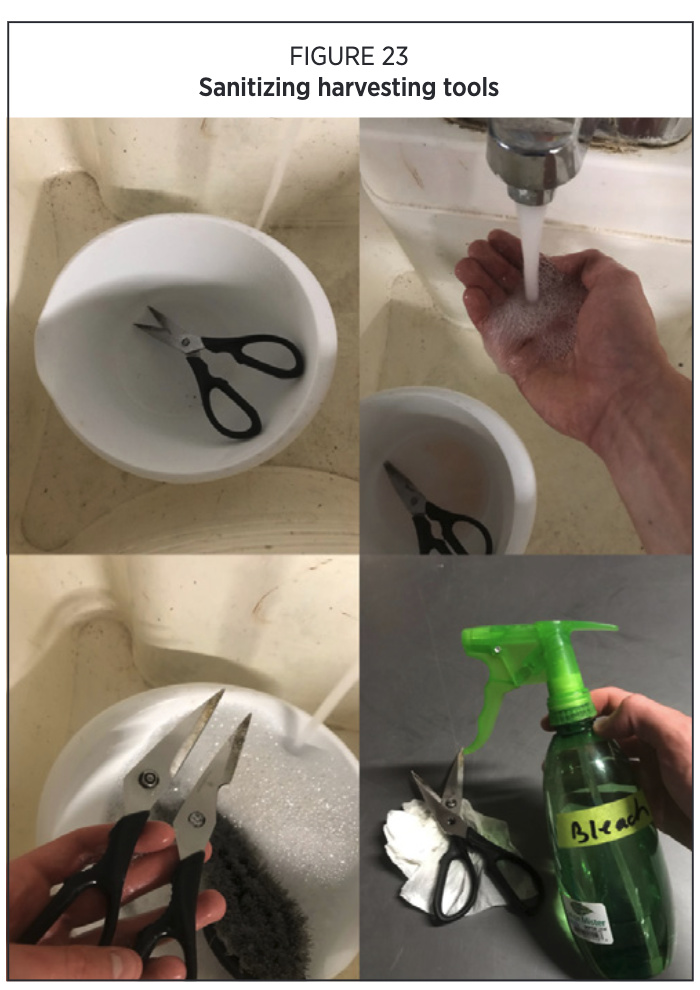
Fish processing regulations may vary from state to state. Plant processing will be regulated by SSOPs, which will include washing hands before harvesting or after touching water; washing tools in soap or diluted bleach solution; maintaining a clean harvest area; and cleaning rafts/grow media with disinfectants (soap, hydrogen peroxide, etc.) (Figure 23).
Potential hazardous foods (PHF) are foods that will spoil, causing food safety issues, if kept at room temperature for certain amounts of time (Busta et al. 2003).This would include both fish and plants (vegetables, microgreens, fruits) produced within aquaponic systems. Improper cooling of foods is the number one cause (>30%) of foodborne illness. Time and temperature are the two factors influencing food spoilage the most. Humidity of the storage environment and equipment will also impact food shelf life. Microgreens and sprouts are especially of concern when considering food safety, as they require no processing or heat- treatment prior to consumption and have a shorter shelf life, making them more susceptible to bacterial spoilage.
Utilizing education, training, and readily available information for employees about food safety practices is the best strategy for prevention. Signs reminding employees to maintain cleanliness can also help.
Additionally, educating employees on where the highest risks of food safety contamination can occur within any operation is key. Cost implications food safety procedure and compliance should be included within a budget.
Source: Janelle Hager, Leigh Ann Bright, Josh Dusci, James Tidwell. 2021. Kentucky State University. Aquaponics Production Manual: A Practical Handbook for Growers.
Kentucky State University — Janelle Hager, Leigh Anne Bright, Josh Dusci, and James Tidwell.
View the original source edition
Reformatted and consolidated from the original web edition.